The mandatory requirements for this theory to function are limited; other elements can be freely chosen.
Requirements
Overflow system (oxygen supply via splash aeration, large sump)
Porous media in sump (bacterial colonization surface)
Regular carbon source dosing (C:N ratio maintenance)
Detritivorous organisms (biomass consumers)
With requirements met, the following parameters can be freely chosen.
Parameter
Options
Effect
Substrate
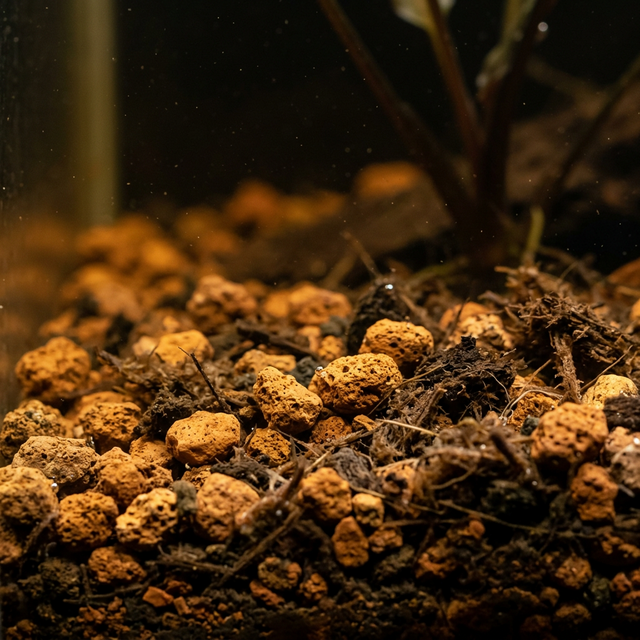
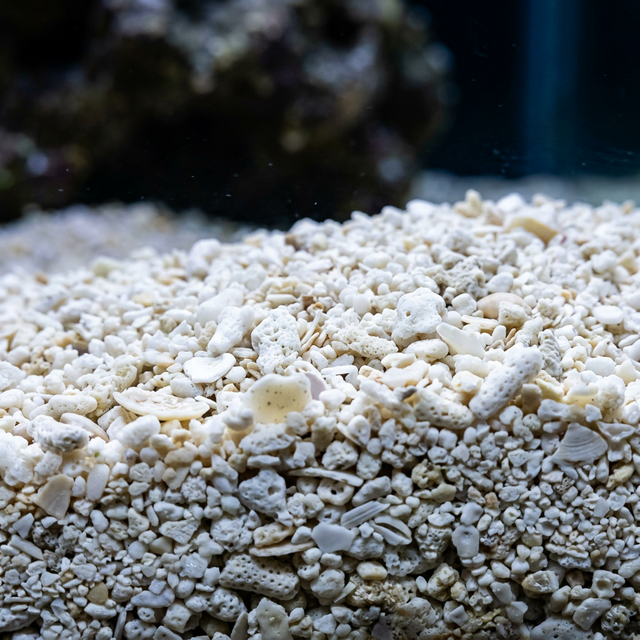
Fired akadama (+peat moss), Oiso gravel, coral sand, bare tank
Determines pH lock equilibrium
Detritivores
Daphnia, Tubifex, Gammarus, Neocaridina, Loach, etc.
Size determines full-auto viability
Circulation
Full-auto / Manual / Large pump
Maintenance effort
Carbon source
Ethanol, acetic acid, sucrose, etc.
Different decomposition rates
Main tank
Planted / bare / large tank
Theoretically applicable to all
2.1.1 Substrate Material Selection
The substrate material is the parameter that determines the pH lock equilibrium point. Since the primary bacterial colonization surface in this theory is the porous media in the sump, the substrate functions to set the pH baseline. The sump media must be porous, but if this condition is met, the same material as the substrate can be used.
Fired Akadama + Peat Moss
pH 5.5〜6.5
Tannic and fulvic acids from peat moss leach out, lowering pH. Does not disintegrate; long-term viable
Chocolate gourami, Apistogramma, and other ultra-soft, weakly acidic species
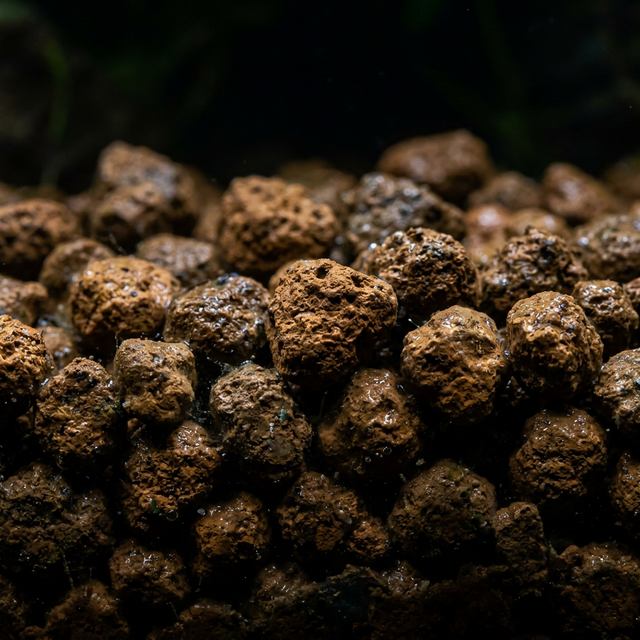
Fired Akadama
pH 6.7〜6.9
Weakly acidic, porous with good bacterial colonization. Long-term viable
Tetras, angelfish, and other weakly acidic fish
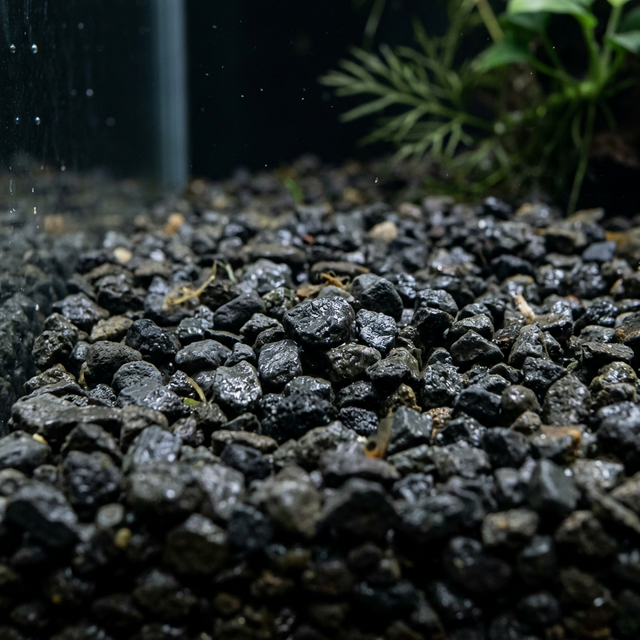
Oiso Gravel
pH ~7.0
Neutral, stable, long-term usable. Slightly alkaline if shell content is high
Goldfish, medaka, and fish preferring neutral to mildly alkaline
Bare Tank
pH ~7.0
No substrate. pH equilibrium depends on sump media. Easy maintenance
Marine fish, African cichlids, brackish fish, etc.
2.1.2 Types and Properties of Carbon Sources
Carbon sources are the energy source for bacteria, with different decomposition rates depending on type. Since the nitrogen source (NH₄⁺) is rate-limiting, excess carbon is dissipated as CO₂, making precise measurement unnecessary. However, extreme overdosing can degrade water quality, so adjusting dosage based on pH trends is recommended.
Ethanol C₂H₅OH
Ethanol → Acetic acid → TCA cycle
Fast
Acetic Acid CH₃COOH
Supplied directly as acetic acid
Medium
Sucrose C₁₂H₂₂O₁₁
Sucrose → Hydrolysis to monosaccharides
Slow
This theory uses a "carbon source extract" mixing multiple carbon sources. This mitigates the risk of rapid bacterial proliferation and oxygen consumption while achieving stable continuous supply. Specific recipes are explained in Chapter 3.
2.1.3 Benthos Selection and Full-Auto Conditions
The selection of detritivorous organisms (benthos) directly affects the degree of circulation automation. For the full-auto method, benthos must be small enough to pass through the supply pump impeller.
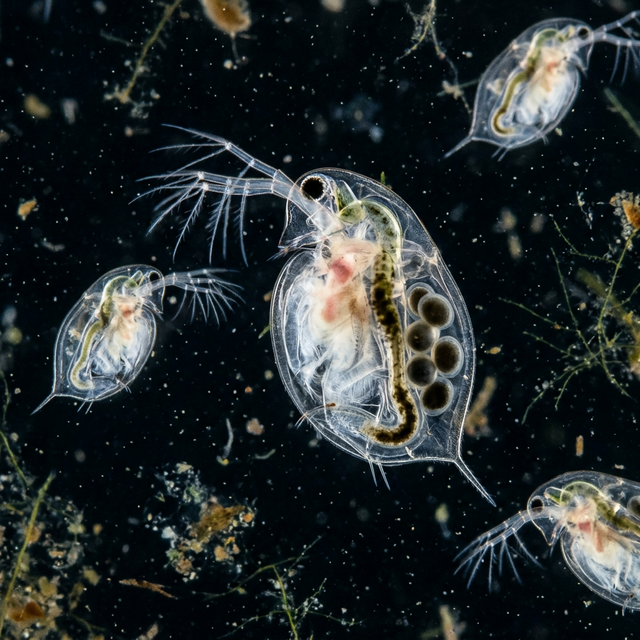
Daphnia
0.2〜3mmFull-auto
Directly filter-feeds suspended bacteria. High water quality improvement effect, ideal live food for small fish. Also serves as dissolved oxygen indicator
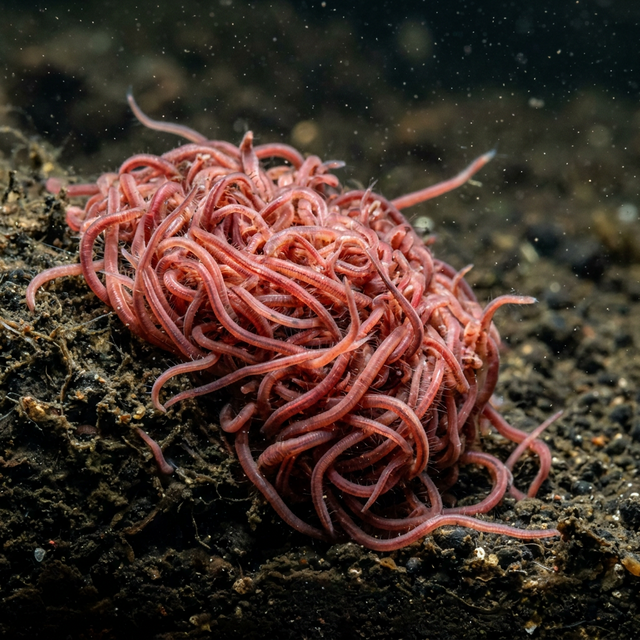
Tubifex
〜2mmFull-auto
Fast reproduction rate, easy to supply stably. Highly palatable to fish
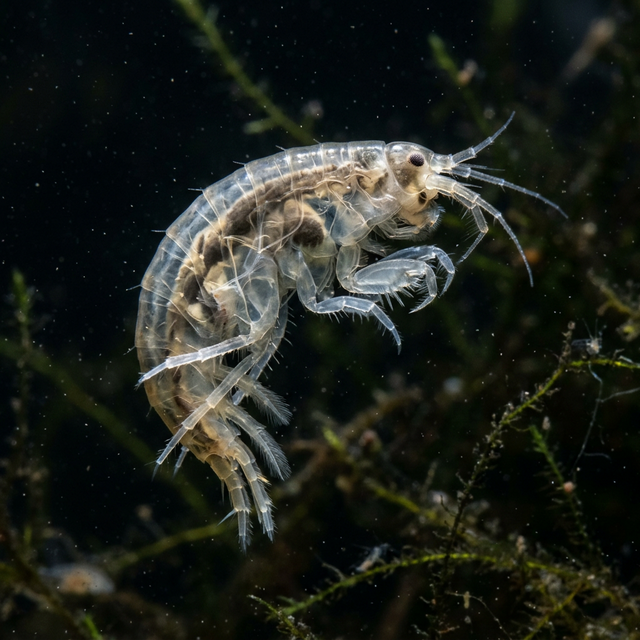
Gammarus
2〜10mmFull-auto
Also effective at substrate agitation. Many fish readily prey on them
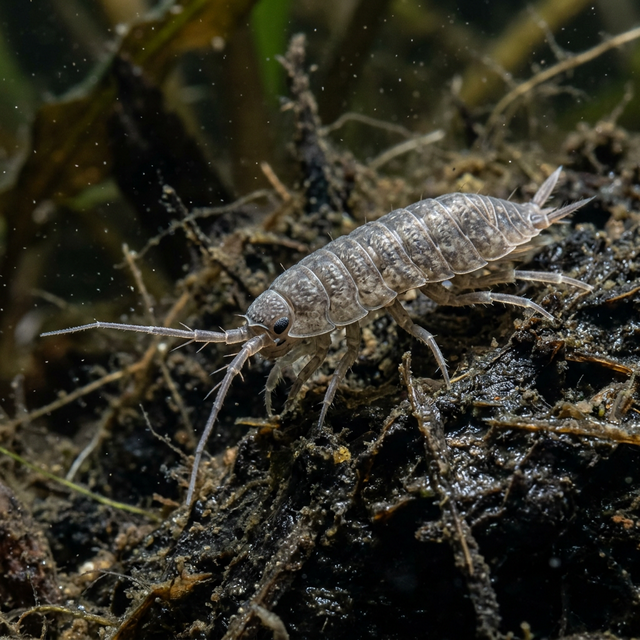
Asellus (Water Louse)
5〜15mmFull-auto
High detritus decomposition ability. Tolerant of low temperatures, stable reproduction in freshwater
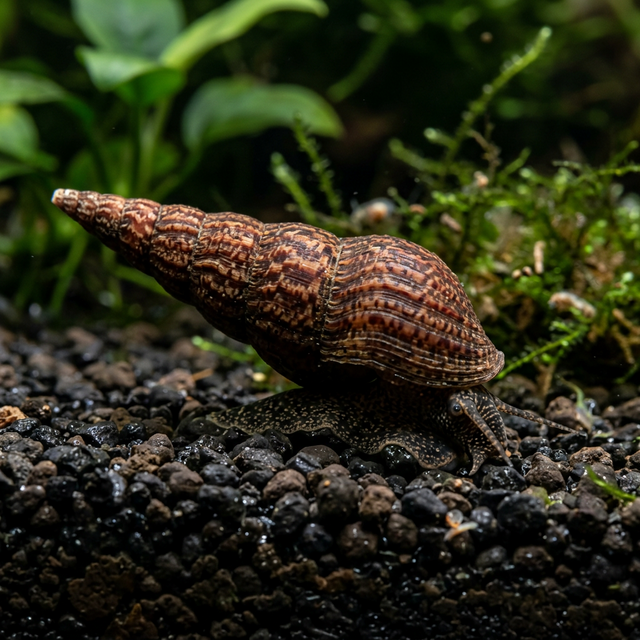
Malaysian Trumpet Snail
1〜3cmManual (substrate agitation)
Burrows into substrate during day preventing anaerobic conditions. Feeds on detritus at night. Substrate agitation function aligns with "non-anaerobic substrate" consequence
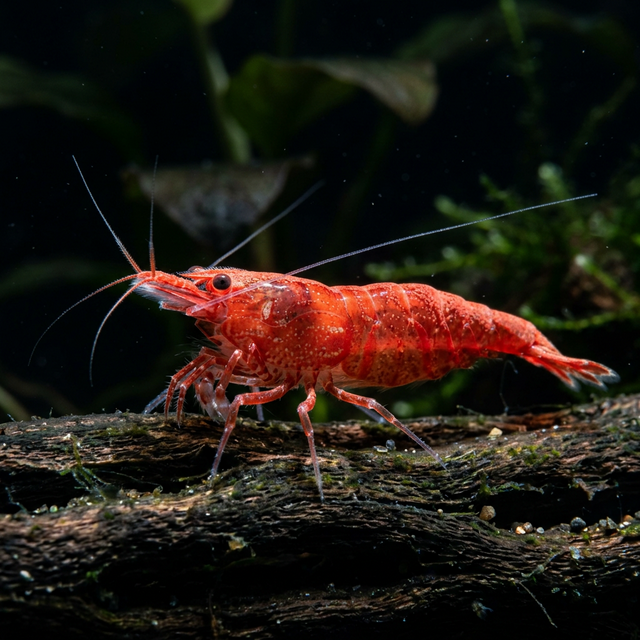
Neocaridina Shrimp
1.5〜3cmFull-auto
Broadly feeds on detritus, algae, and bacterial biomass. Short reproduction cycle with constant supply of juveniles. Easy to obtain
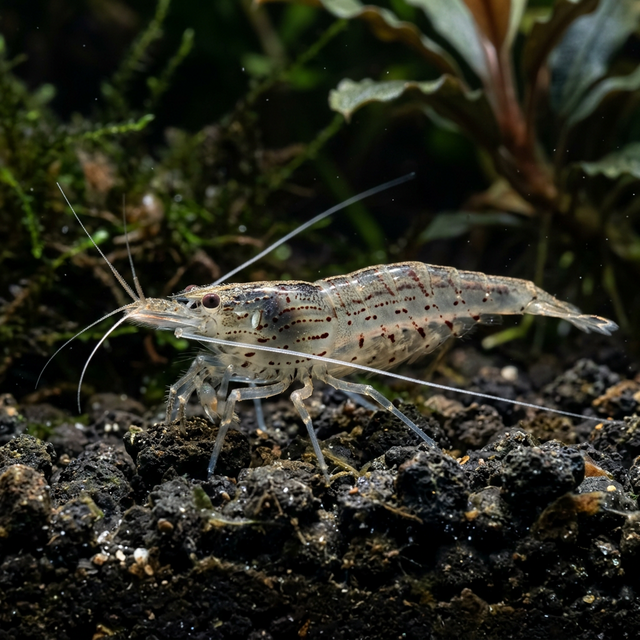
Amano Shrimp
3〜5cmManual / Large pump
Detritus decomposition ability stronger than Neocaridina. Can process larger organic matter.Does not breed in freshwater, so population does not naturally increase
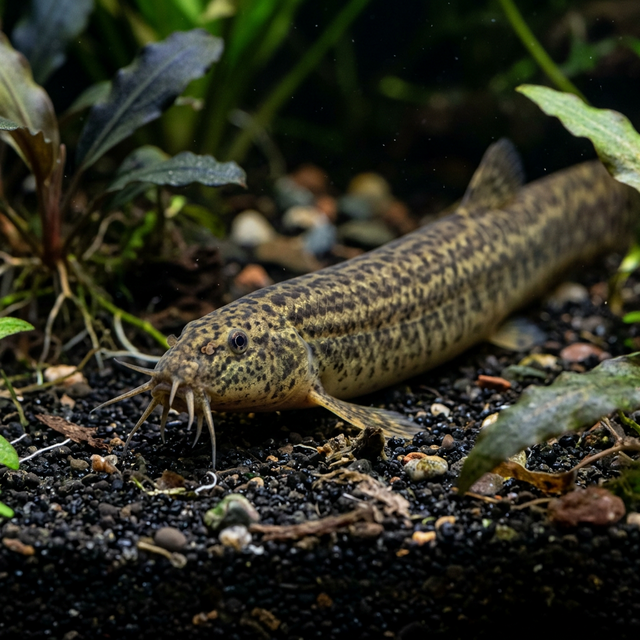
Loach
5〜15cmManual / Large pump
Strong substrate agitation. Ideal as food for large carnivorous fish
Full-Auto Criteria
If the pump impeller clearance is approximately 3mm or more, passage of Tubifex and juvenile Gammarus is often possible. However, checking pump specifications in advance is recommended.
2.1.4 Difficult-to-Apply Configurations
While this theory has broad applicability, the following configurations make it difficult to meet mandatory requirements (sufficient oxygen supply, large sump).
× HOB filter alone: Lacks a large-capacity processing chamber equivalent to a sump, unable to secure space needed for bacterial biomass accumulation and benthos proliferation.
※ Tanks under 30L: Not technically impossible, but bioload and carbon source management become extremely demanding. Recommended only after gaining sufficient experience.