
DailyOne pump of carbon extract into sump
DailyObserve tank (check for abnormalities)
As neededTop off when water level drops
As neededTrim plants when overgrown
The following is the specific configuration adopted by the author. Please refer to it as an implementation example applying the general procedures from Chapter 3 to this environment.
The physical configuration of the tank system is shown below.
| Item | Details |
|---|---|
| Tank Size | 40×60×30cm (tall, custom-made) |
| Sump | 30cm high type |
| Substrate | Fired akadama soil (hard) — weak acid buffering (around pH 6.85) |
| Sump Media | Fired akadama soil (hard) spread |
| Layout Stone | 古葉石(チャーム) |
| Lighting | ブリム パネルA(植物用ライト) |
| Temperature | 25-26°C (heater managed) |
The livestock composition of the main tank is shown below. Species were selected with each layer of the food chain in mind, from bottom-dwellers to apex predators.
| Species | Qty | Layer/Role |
|---|---|---|
| Angelfish | 3 | Apex predator |
| Nannostomus beckfordi | 7 | Mid-upper |
| Ring loach | 1 | Bottom |
| Hong Kong pleco | 2 | Bottom / algae control |
| Dwarf puffer | 1 | Mid / snail control |
| African dwarf frog | 3 | Low-mid |
| Neocaridina shrimp | Multiple | Bottom / cleanup |
| Ramshorn snails | Multiple | Bottom / decomposition |
Tubifex worms, Gammarus, Neocaridina shrimp, etc. are stocked. A full-auto method (pump-passable size) is employed.
Eichhornia azurea and Vallisneria are planted. Both grow well without CO₂ supplementation.
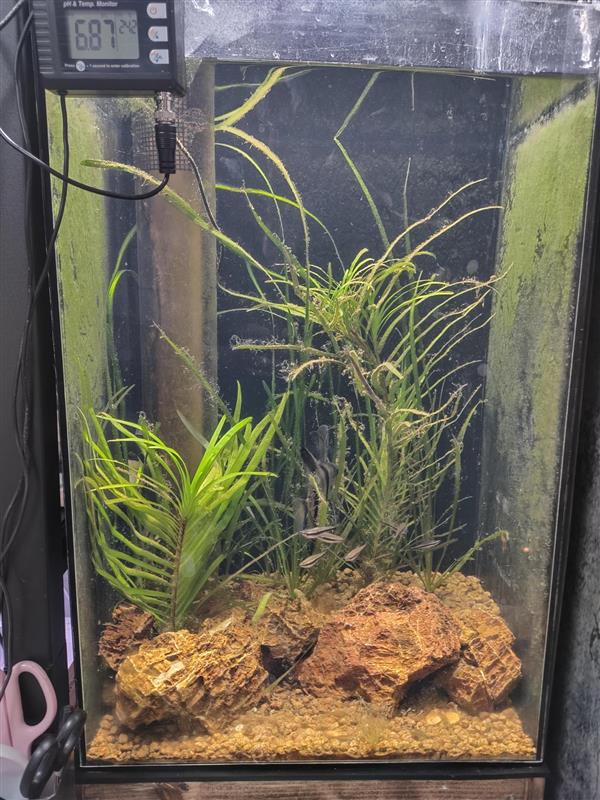
Three types of carbon sources are mixed in the following ratio and dispensed into a pump bottle.
| Ingredient | Amount | Active Component | Decomposition Rate |
|---|---|---|---|
| Vodka (40%) | 200 ml | Ethanol ≈ 63g | Fast |
| Rice vinegar (4.2% acidity) | 50 ml | Acetic acid ≈ 2.2g | Medium |
| Granulated sugar | 15 g | Sucrose 15g | Slow |
Carbon-weight ratio: Ethanol : Acetic acid : Sucrose ≈ 82 : 2 : 16. Mix all and fill a pump bottle. The vodka alcohol acts as a preservative, enabling room-temperature storage.
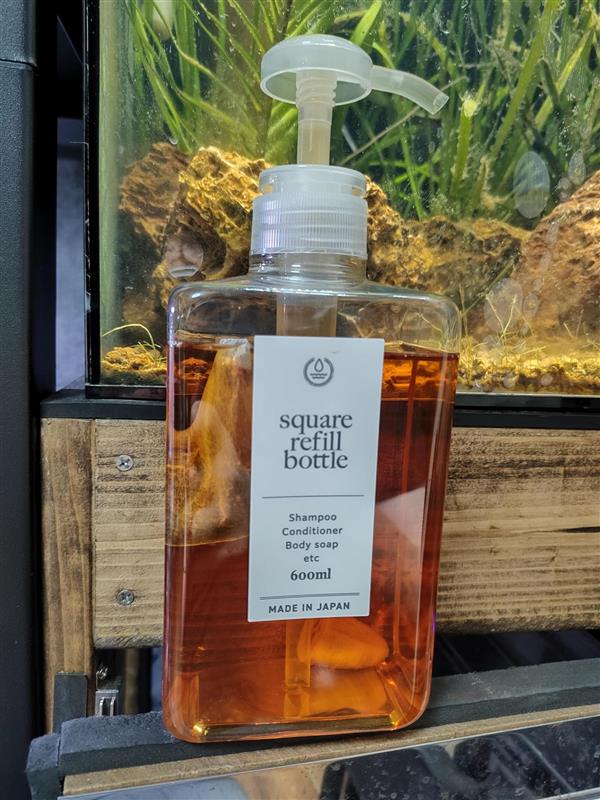
The base liquid (vodka + rice vinegar) functions directly as an extraction solvent for trace elements. Ethanol dissolves a wider range of organic compounds than water, and acetic acid leaches minerals like calcium. By infusing materials in these solvents, carbon source dosing and trace element supplementation are unified, eliminating the need to purchase separate liquid fertilizers. The following are examples used by the author; any material capable of supplying the target minerals can be substituted.
| Material | Elements Supplied |
|---|---|
| Seaweed salt (Moshio) | Na, K, Mg, Ca, Iodine |
| Banana (flesh only) | Potassium, Mg |
| Rooibos tea | Ca, K, Zn, Mn, etc. |
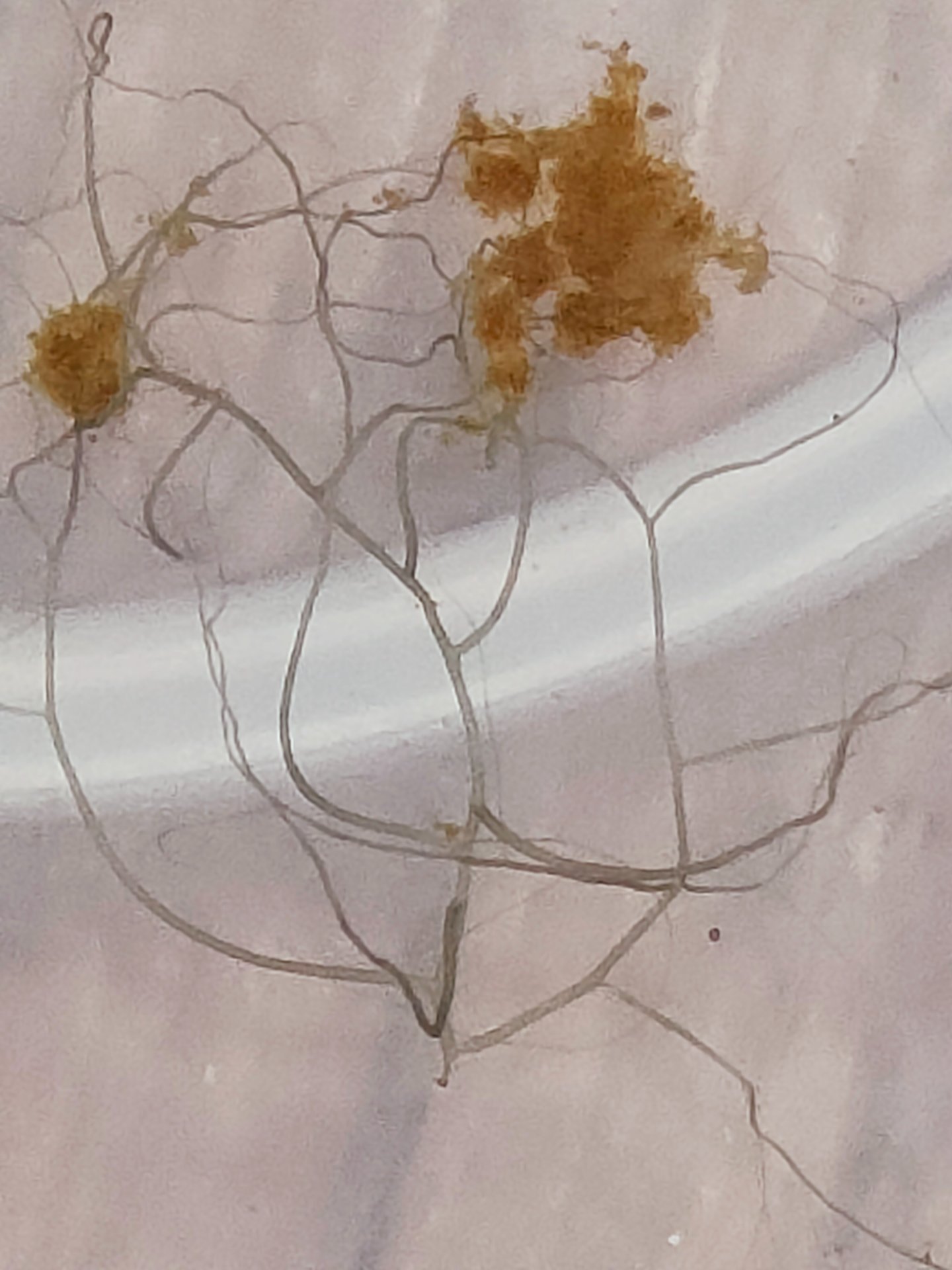
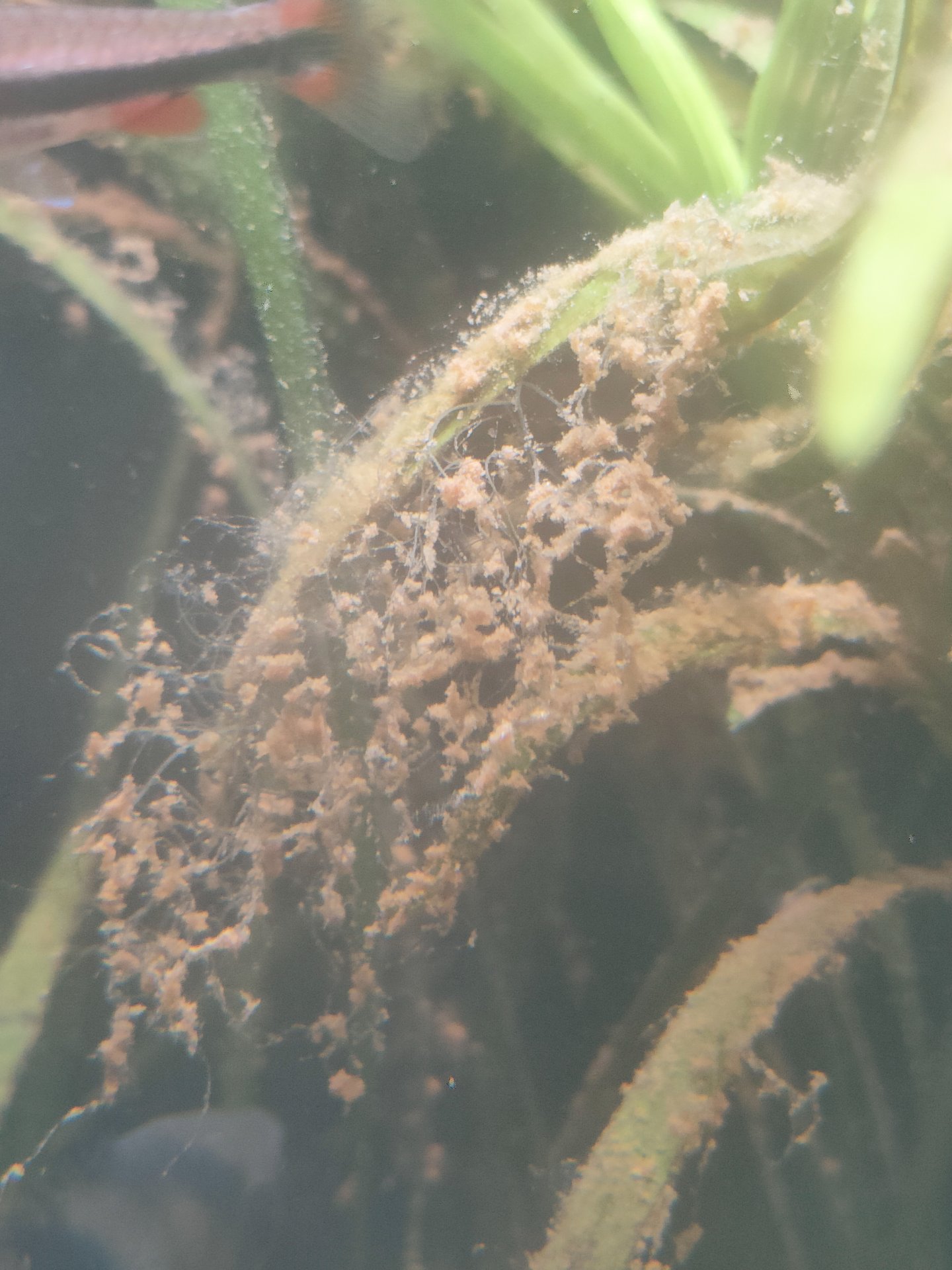
Approximately one year after starting operations, organisms believed to be freshwater hydroid colonies were observed growing in the sump. They extend branching stolons, densely colonizing aquatic plants and glass surfaces. These cnidarians are rarely reported in freshwater environments, and the system's abundant bacteria and micro-crustaceans may have enabled their establishment. This is documented as an interesting observation indicating ecosystem complexification.
pH 6.85 has been stably maintained for one year. This result suggests that the nitrification process is effectively bypassed — i.e., no pH decline from nitric acid is occurring. This coincides with the buffering equilibrium point of fired akadama soil, supporting the "pH lock" hypothesis described in Chapter 1, Section 4.
Maintenance effectively converges to "one pump and observation."
The main materials required for this system, along with their costs and availability, are shown below.
| Item | Cost | Source |
|---|---|---|
| Overflow tank | High (biggest hurdle) | Aquarium shops / online |
| Fired akadama soil | Inexpensive | Home center |
| Vodka, rice vinegar, sugar | Inexpensive | Supermarket |
| Seaweed salt, banana, rooibos tea | Inexpensive | Supermarket |
| Benthos | Cheap to free | Fishing shops / collecting (availability is the challenge) |
Once you have the overflow tank, running costs are virtually zero.